

Specialized Electrolux Appliance Repair in Los Angeles and Orange County
Practical Electrolux troubleshooting for arcing isolation: what you can check safely, what the symptom may mean, and when Los Angeles service is the better next step.
The fastest path is usually symptom-first: document what changed, rule out the safe external causes, and stop before the checks become electrical, gas, refrigerant, or internal mechanical work.
Local conditions around Los Angeles can make an external issue look like an appliance failure: mineral-heavy water, hot utility spaces, restricted built-in ventilation, and post-outage electrical events are all worth documenting when relevant.
The goal here is not to turn a homeowner into an appliance technician. It is to help you collect reliable evidence, make the safe checks that can actually change the diagnosis, and recognize the point where continued testing becomes unsafe or unproductive.
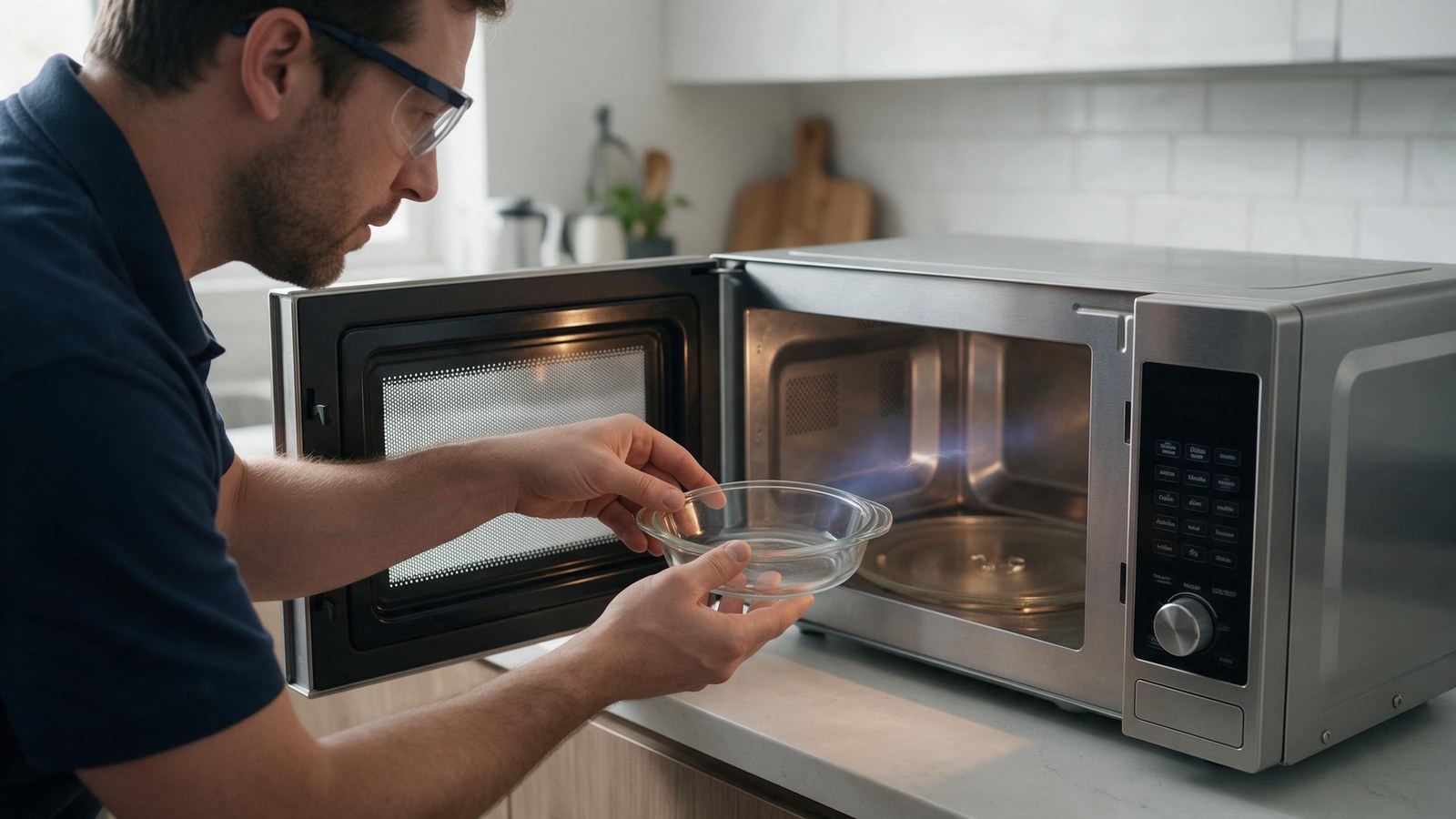
Do not continue running the microwave to see whether sparks stop. Cancel the cycle and inspect the cavity after the appliance is safe.
Arcing can damage interior surfaces and, in some cases, signal a more serious component problem.
If the symptom changes after a simple external correction, repeat the same test once before concluding that the issue is solved. A stable improvement is more useful than a one-time good cycle.
Metal trim, foil, twist ties, some decorated dishes, and food packaging can create arcing depending on shape and placement.
Use cookware and coverings approved for microwave use.
Model documentation should take priority over generic repair advice whenever clearances, disassembly, electrical values, gas procedures, filter types, or service modes are involved.
Carbonized food residue can arc. Clean the cavity according to the owner instructions and check for visibly damaged interior coating or components.
Do not scrape or repaint damaged surfaces with improvised materials.
Avoid using a successful reset as proof that an electronic part is healthy. Intermittent faults can disappear temporarily and return when heat, load, water level, or another operating condition changes.
If sparks happen only with one container or food setup, the load is a strong clue. If arcing occurs with appropriate cookware or without a clear trigger, stop use.
Never run a microwave empty as a diagnostic test.
The key is to compare one controlled condition at a time. Changing several settings, products, loads, or connections at once makes it harder to know what actually improved the result.
Repeated arcing, burned waveguide-cover areas, damaged cavity surfaces, unusual odor, or door damage need professional evaluation.
Do not remove the outer cabinet because high-voltage components can retain dangerous energy.
If the symptom changes after a simple external correction, repeat the same test once before concluding that the issue is solved. A stable improvement is more useful than a one-time good cycle.
The strongest diagnostic clue is usually the relationship between stop the cycle when you see arcing and when service is required. If the symptom changes after the checks in the middle of this guide, keep that result. If nothing changes, the fault is less likely to be a simple use or installation condition.
If the behavior is intermittent, stored fault history and the timeline you provide can be as important as what the appliance does during the appointment.
Several different failures can imitate each other. A control board, for example, should not be condemned just because the display behaves strangely; the board depends on correct supply power, sensors, switches, wiring, and communication from other components. The same principle applies to pumps, valves, motors, fans, heaters, locks, and refrigeration components.
Use the full Electrolux model number before applying an error-code meaning or ordering a part. Similar products can share styling while using different electronics and service procedures.
After the safe external checks, run one normal test only if there are no stop-use conditions. Use the same load or operating mode that originally produced the symptom where practical, and avoid changing several variables at once.
If the symptom is gone, monitor the next normal use. If it returns at the same stage, record the pattern rather than repeating resets. A recurring condition is useful diagnostic evidence.
If the appliance shows an error code, photograph it before clearing the display. Include spaces, dashes, and letters exactly as shown.
Stop using the microwave for arcing, smoke, burning odor, damaged door/latch, repeated overheating, or abnormal operation with the door system. Never remove the outer cabinet for homeowner troubleshooting.
Do not bypass door switches, lid locks, thermal devices, leak protection, breakers, GFCI/AFCI protection, gas safety components, or other interlocks. Do not perform live electrical testing unless you are qualified and equipped for that work.
Schedule service when the symptom returns after the external checks, a normal function can no longer complete, or the problem includes a safety warning.
Professional diagnosis may include door-interlock testing, control and sensor checks, ventilation/convection checks where applicable, and high-voltage-system diagnosis using microwave-safe service procedures.
A good repair estimate should identify the diagnosed fault and the proposed repair. The technician should be able to explain why the failed system matches the symptom and what was tested before the part is ordered.
Provide:
Also mention any recent move, remodeling, plumbing work, electrical work, filter replacement, vent change, power outage, or previous repair that happened near the time the symptom began. Those details can move the diagnosis in a different direction.
If the problem described here keeps returning on your Electrolux appliance, book a model-specific diagnosis in Los Angeles. Start with the model number and the symptom sequence so the visit can focus on the system that is actually failing rather than trial-and-error parts replacement.
Certain foods, packaging, or metallic contaminants can contribute to arcing.
Stop using that plate and inspect the cavity. If arcing occurs again with known microwave-safe cookware, arrange service.
No. Microwave high-voltage components are hazardous even after unplugging.
Share a few details and we’ll confirm an appointment. Prefer to talk? Call us and we’ll help right away.
Fields marked with * are required.