
Repair Service
Electrolux Wine & Beverage Refrigeration Repair in Los Angeles
Electrolux wine and beverage refrigeration repair in Los Angeles for temperature, airflow, door-seal, control, fan, compressor, and cooling problems.
At a glance
Overview
Electrolux wine and beverage refrigeration repair in Los Angeles for temperature, airflow, door-seal, control, fan, compressor, and cooling problems.
Los Angeles homes range from compact apartments and stacked laundry closets to hillside properties and fully built-in kitchens. Access and installation conditions can materially affect diagnosis. In Los Angeles and Orange County, note tight cabinetry, long dryer vent routes, warm garages, hard-water conditions, gated access, elevators, and recent remodeling when they are relevant to the complaint.
Start with the symptom and model number
The full model number is the anchor for a correct repair path. Electrolux uses multiple product generations and control platforms, so a symptom or code from one appliance should not automatically be applied to another.
Before changing settings or resetting power, record:
- the complete model number from the rating label
- the exact symptom
- the exact error code or display message
- the operating stage where the failure starts
- whether the condition is constant or intermittent
- any unusual noise, odor, heat, vibration, leaking, weak airflow, weak water flow, or electrical behavior
- recent installation, relocation, remodeling, power, plumbing, venting, or filter changes.
A short video or photo can be useful when it can be taken safely.
Common wine & beverage refrigeration problems we diagnose
- Condensation becomes persistent — note when it begins and what still works normally.
- Unit runs but does not cool effectively — note when it begins and what still works normally.
- Cabinet runs too warm — note when it begins and what still works normally.
- Fan noise increases — note when it begins and what still works normally.
- Temperature swings are larger than normal — note when it begins and what still works normally.
- Display or controls reset — note when it begins and what still works normally.
These symptom groups overlap. A slow cycle can be caused by a supply condition, for example, while the same symptom on another model may trace to a sensor, pump, fan, heater, valve, motor, or control. The diagnosis should follow the sequence, not a generic “common parts” list.
Safe checks before booking service
- Record any display message before one normal reset.
- Make sure bottles or containers are not blocking airflow.
- Keep required cabinet ventilation openings clear.
- Inspect the visible door gasket and confirm full closure.
Use one controlled retest only when there are no safety warning signs. If the symptom returns at the same stage, keep that pattern for the technician instead of repeatedly resetting the appliance.
Stop-use conditions
Move temperature-sensitive contents if storage conditions cannot be maintained. Disconnect power for smoke, sparks, burning odor, or moisture reaching electrical components.
Do not bypass interlocks, door switches, lid locks, thermal devices, leak protection, breakers, GFCI/AFCI protection, gas controls, or other safety components.
Systems a technician may evaluate
Depending on the exact symptom and model, diagnosis may include:
- Temperature sensors
- Compressor/start system
- Sealed refrigeration circuit
- Evaporator airflow and fans
- Electronic control
- Door sealing
That list is a diagnostic map, not a replacement list. A failed connector, harness, household supply condition, blocked airflow or water path, installation issue, or secondary sensor can imitate a more expensive component failure.
How professional diagnosis should work
A structured visit should:
- reproduce the reported symptom when it is safe
- verify the external supply or installation conditions tied to that operating stage
- review stored fault data or service-mode information when the exact model supports it
- test the specific sensor, actuator, motor, valve, heater, fan, relay, control, or circuit implicated by the symptom
- confirm the failed component before ordering parts
- explain the finding and repair scope before work begins
- verify correct operation after the approved repair.
If the appliance operates normally during the visit, the symptom timeline, photos, video, and stored codes can still help narrow an intermittent problem.
Electrolux error codes
An error code is useful, but it is not a universal parts order. Confirm the code on the exact Electrolux model and appliance family.
If a code clears after one reset and then returns during the same stage, treat the underlying condition as unresolved.
What changes the repair estimate?
Repair pricing cannot be determined accurately from a symptom alone. Model, access, confirmed failure, part availability, and whether the problem is inside or outside the appliance all affect the estimate.
Before approved work begins, the customer should receive a clear explanation of the diagnosed issue and the proposed repair. Do not promise a fixed price from a symptom or code alone.
Repair or replace?
Consider replacement only after the failure is identified. Useful factors include:
- confirmed repair cost
- condition of other major systems
- age and prior repair history
- model-specific parts availability
- installation complexity
- access to built-in or stacked equipment
- delivery, haul-away, plumbing, electrical, gas, venting, or cabinetry costs associated with replacement
- any manufacturer, retailer, credit-card, or other applicable coverage.
One isolated, serviceable fault can be economically different from repeated failures across several major systems.
Preparing for a Los Angeles service visit
Provide:
- the actual service address or ZIP
- property or building access notes
- parking, gate, elevator, loading, stair, or hillside-drive information when relevant
- the model number and appliance type
- the exact symptom and code
- whether water, electrical, gas, or vent shutoffs are accessible
- whether the appliance is built-in, under-counter, stacked, or in a tight utility space.
Leave built-in or stacked equipment installed unless the service provider specifically asks you to move it.
Request Wine & Beverage Refrigeration repair in Los Angeles
Send the service address or ZIP, model number, symptom, and error code through the booking form. Coverage and appointment availability should be confirmed for the actual property.
Symptoms
Common problems we diagnose
- **Condensation becomes persistent** — note when it begins and what still works normally.
- **Unit runs but does not cool effectively** — note when it begins and what still works normally.
- **Cabinet runs too warm** — note when it begins and what still works normally.
- **Fan noise increases** — note when it begins and what still works normally.
- **Temperature swings are larger than normal** — note when it begins and what still works normally.
- **Display or controls reset** — note when it begins and what still works normally.
Explore
Related appliances
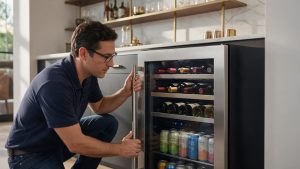
Electrolux Wine Cooler Repair
Electrolux wine and beverage refrigeration repair in Los Angeles for temperature, airflow, door-seal, control, fan, compressor, and cooling problems. Confirm coverage by ZIP.
Service areas
Nearby locations
FAQ
Frequently asked questions
One normal reset can clear a temporary control event when the symptom is safe. If the same code returns, repeated resets are not a repair.
Usually no. Confirm the failure first, then match the part to the complete model and any relevant serial or production information.
No fixed response time is promised by this copy. Appointment availability should be confirmed for the actual address, appliance type, access conditions, and current route capacity.
Yes. Similar-looking Electrolux products can use different controls, sensors, motors, valves, heaters, fans, wiring, and diagnostic conventions.
Send the service ZIP or address, complete model number if available, exact symptom, displayed code, and any recent installation, power, water, venting, filter, or repair change.
Book a repair
Tell us what’s wrong — we’ll take it from there
Share a few details and we’ll confirm an appointment. Prefer to talk? Call us and we’ll help right away.
Phone
(310) 361-3405
Email
electroluxla@gmail.com
Hours
Monday–Sunday: 8:00 AM – 8:00 PM
Service area
Los Angeles and Orange County
Request your repair
Fields marked with * are required.